
What Is Asbestos?
Is Asbestos Dangerous?
Are All products With Asbestos A Health Risk?
Do All People Exposed To Asbestos, Develop Asbestos Related Disease?
What Are Asbestos-Containing Products?
How Can I tell If I Have Asbestos In My Home?
If Asbestos Is Found In My Home, What Should I Do?
What Is Asbestos?
Asbestos is a mineral fiber found in rocks, of naturally occurring silicate minerals that can be separated into fibers. There are several kinds of asbestos fibers, all of which are fire resistant and not easily destroyed or degraded by natural processes. The fibers are strong, durable, and resistant to heat and fire. They are also long, thin and flexible, so that they can even be woven into cloth, because of these qualities, asbestos has been used in thousands of consumer, industrial, maritime, automotive, scientific and building products.
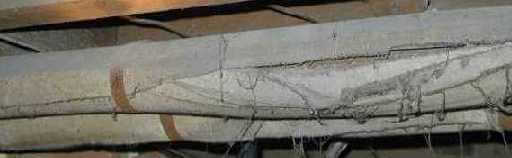
The above photo shows a typical asbestos insulated heating pipe found in older homes.
During the twentieth century, some 30 million tons of asbestos have been used in industrial sites, homes, schools, shipyards and commercial buildings in the United States. There are several types of asbestos fibers, of which three have been used for commercial applications: (1) Chrysotile, or white asbestos, comes mainly from Canada, and has been very widely used in the US. It is white-gray in color and found in serpentine rock. (2) Amosite, or brown asbestos, comes from southern Africa. (3) Crocidolite, or blue asbestos, comes from southern Africa and Australia.
Is Asbestos Dangerous?
Asbestos has been shown to cause cancer of the lung and stomach according to studies of workers and others exposed to asbestos. There is no level of exposure to asbestos fibers that experts can assure is completely safe. Some asbestos materials can break into small fibers which can float in the air and these fibers can be inhaled. The tiny fibers are so small they can not be seen with the naked eye. They can pass through the filters of normal vacuum cleaners and get back into the air. Once inhaled, asbestos fibers can become lodged in tissue for a long time. After many years cancer or mesothelioma can develop.
Are All products With Asbestos A Health Risk?
No. A health risk exists only when asbestos fibers are released from the material or product. Soft, easily crumbled asbestos containing material has the greatest potential for asbestos release and therefore has the greatest potential to create health risks.
Do All People Exposed To Asbestos, Develop Asbestos Related Disease?
No. Most people exposed to small amounts of asbestos do not develop any related health problems. Health studies of asbestos workers and others, however, show that the chances of developing some serious illnesses, included lung cancer, are greater after exposure to asbestos.
What Are Asbestos-Containing Products?
What is common to many asbestos-containing products is that they were (are) used to contain heat (i.e. thermal insulation.) This was the main reason for their use. It is impossible to list all of the products that have, at one time or another, contained asbestos. One of the most common products asbestos is found in, is in the insulation material found on heating pipes and ducts of homes built before 1960.
Some of the other common asbestos-containing products are insulating cement, insulating block, asbestos cloth, gaskets, packing materials, thermal seals, refractory and boiler insulation materials, transite board, asbestos cement pipe, fireproofing spray, joint compound, vinyl floor tile, ceiling tile, mastics, adhesives, coatings, acoustical textures, duct & pipe insulation for heating, ventilation and air conditioning (HVAC) systems, roofing products, insulated electrical wire and panels, and brake and clutch assemblies.
 How Can I tell If I Have Asbestos In My Home?
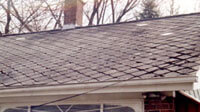 How Can I tell If I Have Asbestos In My Home?
People who have frequently worked with asbestos (such as plumbers, building contractors or heating contractors) often are able to make a reasonable judgment about whether or not a material contains asbestos on a visual inspection. Many professional home inspectors also can make a reasonable visual judgment. To be absolutely certain, an industrial hygienist would have to make the identification.
If Asbestos Is Found In My Home, What Should I Do?
In most cases, asbestos containing materials are best left alone.
When it is necessary to disturb asbestos, you should contact a licensed asbestos contractor. You can also obtain a copy of Asbestos in the Home published by the U.S. Consumer Products Safety Commission (800-638-2772) which discusses the situation and makes recommendations. Remember, do not dust, sweep, or vacuum particles suspected of containing asbestos fibers.
